
Your Personal Brand: How to Be Seen in a Crowded Market
In a crowded market, being good at what you do is not always enough. People also need to understand who you are, what you stand for, and why they should remember you.
Busy seasons like AEP can put your personal brand into sharper focus.
Your schedule fills up. Clients need answers. Prospects are comparing options. Marketing becomes louder and more competitive.
That makes this the right time to ask:
How do you want to show up in your business, your community, and for yourself?
Your personal brand is not just your logo, colors, website, or social media profile. It is the experience people associate with your name.
It is how you communicate.
It is how you make clients feel.
It is what people expect when they refer someone to you.
A clear personal brand can help you stand out during AEP and build stronger relationships throughout the year.
What Is a Personal Brand for Insurance Agents?
A personal brand is the reputation you build through your communication, service, values, and visibility.
It tells people:
- Who you help
- What you care about
- How you approach your work
- What they can expect from you
- Why they should trust you
Your brand is not what you claim to be.
It is what people experience when they work with you.
You may want to be known as the agent who explains complicated information clearly. The producer who always follows up. The local resource who leads with education instead of pressure.
Those qualities are your brand.
Personal Brand vs. Visual Brand: What’s the difference?
Your personal brand is what people experience when they interact with you.
It includes your:
- Values
- Communication style
- Reputation
- Client experience
- Approach to service
Your visual brand is how that identity looks across your marketing.
It includes your:
- Logo
- Colors
- Fonts
- Photography
- Website
- Marketing materials
The strongest brands connect the two.
If you want to be known as clear, approachable, and dependable, your visual brand should feel simple, welcoming, and consistent.
Your visuals should support the experience you promise, not distract from it.
Think of your personal brand as the message and your visual brand as the packaging. The message builds trust. The packaging helps people recognize and remember it.
Want practical ways to bring your brand to life? Explore these branding tips for independent agents.
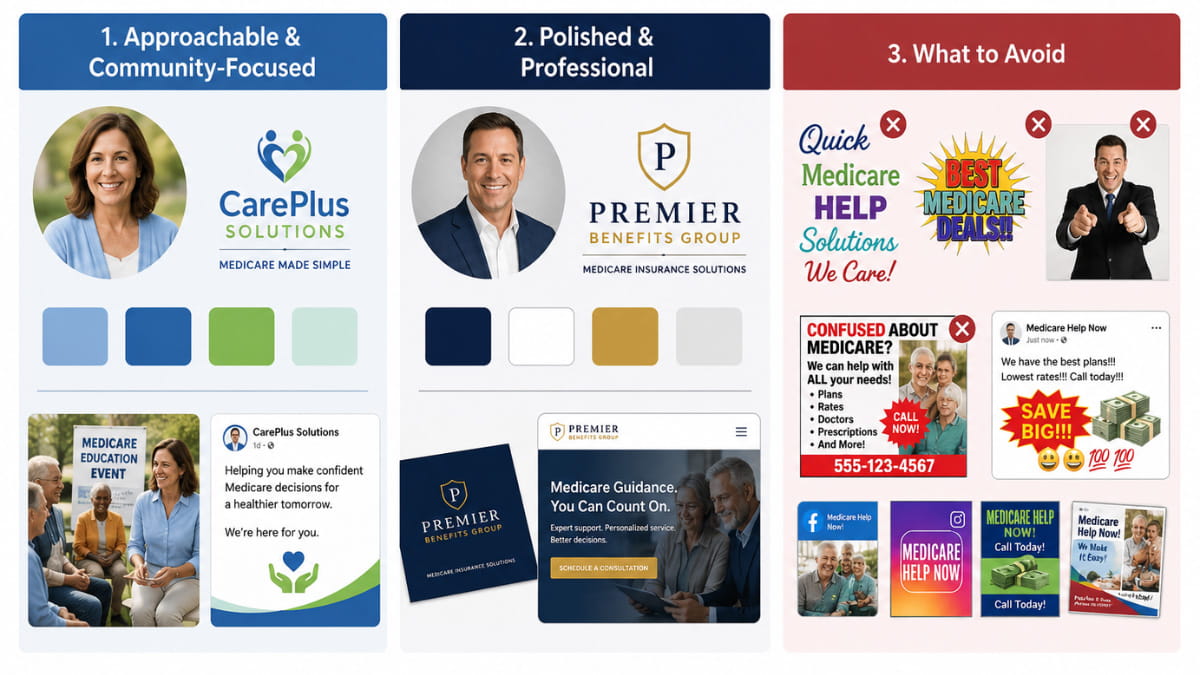
What Does a Strong Visual Brand Look Like?
A strong visual brand does not need to be complicated. It needs to feel intentional and consistent.
For example, an agent who wants to appear approachable and community-focused might use:
- Warm, natural photography
- Friendly colors such as soft blues, greens, or warm neutrals
- Simple fonts that are easy to read
- Images of real community involvement
- Clean marketing materials with plenty of white space
An agent who wants to appear polished and highly professional might use:
- Structured layouts
- A refined color palette
- Consistent headshots and photography
- Clear, confident typography
- Simple graphics that make information easier to understand
The goal is not to copy another agent’s style. Your visual brand should reflect how you want clients to feel when they work with you.
Your Logo Is One Piece of the Brand
A logo can help people recognize your business, but it is not your entire brand.
Your logo should be:
- Simple enough to recognize quickly
- Easy to read at different sizes
- Clear in both print and digital formats
- Consistent with the tone of your business
- Professional without feeling overly complicated
Avoid adding too many colors, icons, fonts, or detailed graphics. A busy logo can become difficult to read on social media, business cards, event signage, or mobile devices.
Your logo should also work alongside your name, headshot, colors, and messaging. When those elements feel connected, your brand becomes easier to recognize across your website, social media pages, emails, presentations, and printed materials.
Before approving or updating a logo, ask:
- Does this reflect how I want clients to see me?
- Is it easy to recognize and read?
- Will it still look clear when it is small?
- Does it fit the rest of my marketing?
- Can I use it consistently across every platform?
- Does this design avoid using Medicare, CMS, or government-related names, symbols, or imagery in a way that could cause confusion?
- Am I avoiding the use of the Medicare card design or similar red, white, and blue color combinations that could imply affiliation with Medicare or a government agency?
- Does this logo clearly represent my business without suggesting endorsement or approval by Medicare or any federal program?
How Do You Want to Show Up in Your Medicare Business?
Start by defining the experience you want clients to have.
Choose three words that describe how you want people to feel after working with you.
For example:
- Informed
- Comfortable
- Respected
- Confident
- Supported
- Heard
Use those words as a filter for your communication and service.
- If you want clients to feel informed, simplify your explanations.
- If you want them to feel supported, create a dependable follow-up process.
- If you want them to feel respected, listen before recommending a next step.
Your brand becomes stronger when the experience matches the message.
Create a Simple Brand Promise
A brand promise explains what clients can consistently expect from you.
For example:
I help clients understand their Medicare options through clear education, patient guidance, and dependable service.
It does not need to sound clever. It needs to sound true.
A strong brand promise can guide your website, social media content, client appointments, emails, events, and referral conversations. It can also help you build a more intentional AEP marketing plan that feels consistent with the way you want clients to experience your business.
How Do You Want to Show Up in Your Community?
People often trust professionals they recognize.
That does not mean you need to attend every event or post online every day. It means showing up consistently in ways that fit your business and values.
You might:
- Host educational events
- Participate in local health fairs
- Support senior-focused organizations
- Build relationships with local businesses
- Volunteer for a cause you care about
- Share useful community information
- Answer common insurance questions online
The goal is not to sell in every interaction.
The goal is to become a familiar and helpful resource.
Show Up Prepared This AEP
Your personal brand gets people’s attention. A clear plan helps you make the most of it. Get exclusive resources to help prepare, stay organized, and communicate with confidence throughout the busy season.
How Do You Want to Show Up Online?
Your online presence should reinforce the same experience people receive in person.
A prospect may see your social media page, website, or Google Business Profile before they ever speak with you.
Make sure your digital presence clearly communicates:
- Who you serve
- What types of questions you help answer
- What makes your approach different
- How someone can contact you
- What they can expect next
Your content does not need to be complicated.
Answer common questions. Explain confusing topics. Share reminders. Highlight community involvement. Help prospects feel more prepared.
Education builds credibility without relying on aggressive sales language.
Ready to strengthen your digital presence? Check out these social media branding tips for licensed insurance agents.
How Do You Want to Show Up for Yourself?
Your personal brand is also connected to the type of business you want to build.
During a busy season, it is easy to become reactive. You answer the next call, attend the next appointment, and move to the next task.
But a strong brand requires consistency.
Ask yourself:
- What standards do I want to maintain?
- What boundaries help me serve clients well?
- What systems would make follow-up easier?
- What tasks should I simplify or delegate?
- What does success look like beyond production?
You do not need to be perfect to build a trusted brand.
You need to be clear, dependable, and willing to improve.
Confidence matters more than perfection.
How to Strengthen Your Personal Brand
Start with four practical steps.
1. Define Who You Serve
Marketing is not one-size-fits-all.
Identify the clients, communities, or markets you understand best. The clearer your audience is, the easier it becomes to create relevant messaging.
2. Clarify What You Want to Be Known For
Complete this sentence:
I want clients and community partners to know me as the agent who __________.
Your answer might be:
- Makes complicated information easier to understand
- Responds quickly and follows through
- Provides patient, no-pressure guidance
- Remains available after the sale
- Connects clients with helpful resources
3. Make Your Message Consistent
Your website, social profiles, email communication, events, and appointments should reflect the same values and tone.
Consistency helps people recognize and remember you.
4. Keep Compliance Part of Your Brand
Trust depends on more than good service.
Your marketing and communication must also follow applicable CMS guidance, carrier requirements, and other rules related to your business.
Use approved materials when required. Avoid exaggerated claims. Follow permission-to-contact rules. Ask your compliance contact when you are unsure.
Compliance is not separate from your personal brand.
It is part of your reputation.
Your Brand Is Built One Interaction at a Time
Your personal brand is not created in a single campaign.
It is built when you explain something clearly.
It is built when you follow up.
It is built when you show up in your community.
It is built when you educate instead of pressure.
AEP may be the season that brings your brand into focus, but the reputation you build can support your business all year.
You do not need to become louder.
You need to become clearer.
Turn Your Personal Brand Into a Growth Strategy
Book a Growth Audit Strategy Call with AGA to evaluate how you are showing up, identify opportunities, and create a clearer plan for sustainable growth.
Frequently Asked Questionss
Why is personal branding important for insurance agents?
Personal branding helps agents build recognition, communicate their value, strengthen trust, and create a more consistent client experience.
Does a personal brand require a professional logo?
No. Visual branding can support recognition, but your personal brand begins with your reputation, service, values, and communication style.
How can agents build trust online?
Agents can build trust by answering common questions, sharing educational information, maintaining accurate business profiles, communicating consistently, and following applicable compliance requirements.
How does AEP affect an agent’s personal brand?
AEP creates more client interactions and greater competition for attention. It gives agents an opportunity to demonstrate their responsiveness, clarity, professionalism, and commitment to service.
Latest Posts

AEP Planning Calendar: How Licensed Insurance Agents Can Prepare All Year, Not Just in October

Insurance Broker’s Medicare AEP Game Plan

Avoiding AEP Burnout: Systems That Let You Sell Hard Without Melting Down

The 90-Day AEP Readiness Timeline: What Top Producers Do From July to October

AEP Retention Playbook: 7 Touchpoints to Protect Your Existing Book
0 Comments